INSIDER: Declutter Your Mind
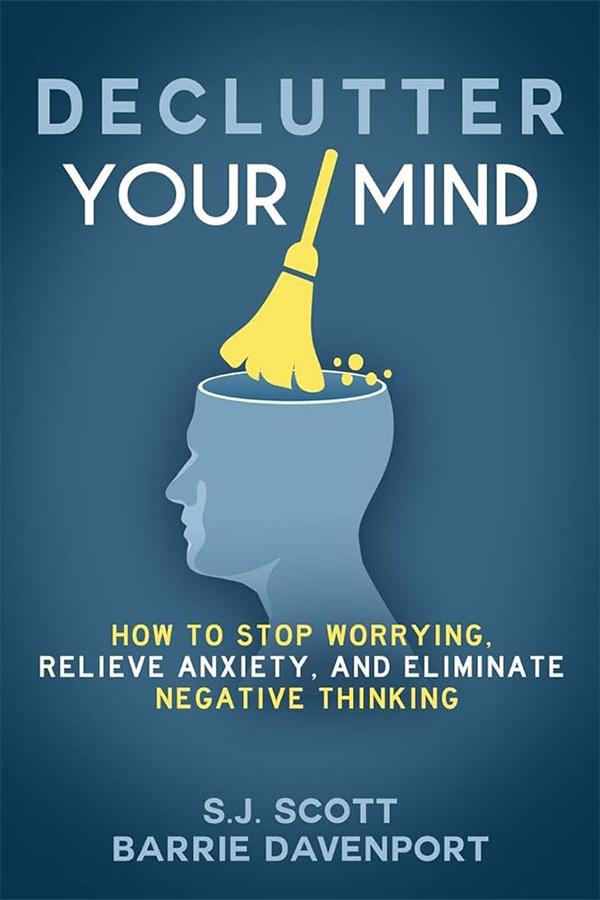
For many, mental clutter is a constant companion, with minds filled with worries, anxieties, and distractions that often crowd out peace and clarity. Authors Barrie Davenport and S.J. Scott explore this problem in their book Declutter Your Mind, where they present a practical approach to achieving mental clarity through mindfulness practices. Designed for anyone seeking relief from stress, this book offers readers tools and techniques to take control of their inner dialogue and eliminate mental noise.
Davenport and Scott propose that our minds can become overloaded with unproductive thoughts, creating a clutter that, over time, impacts health, productivity, and overall happiness. Just as physical clutter in our homes can lead to stress and unease, mental clutter makes it difficult to focus, relax, and enjoy life. Through practical exercises and science-backed strategies, the authors guide readers toward building a calmer and more intentional life.
THINK POINT #1: Causes and Effects of Mental Clutter
According to Davenport and Scott, four main causes contribute to mental clutter: the paradox of choice, an overabundance of “stuff,” negativity bias, and the leading cause, stress. Stress is not limited to major life events; everyday stressors, like work demands, financial concerns, and family responsibilities all contribute. Davenport and Scott cite studies that illustrate how stress affects cognitive function, lowering our ability to make decisions and retain information. This has been supported by research showing that stress reduces intelligence scores by about 25% under high-stress conditions. While stress is unavoidable, we must actively manage it to maintain mental clarity. Techniques like focused breathing, mindfulness exercises, and meditation can help mitigate these effects, allowing the mind to relax and recharge.
In a world of seemingly endless choices, our minds can also become bogged down by decision fatigue. Barry Schwartz, who first coined the term “paradox of choice,” found that while having options is typically viewed as a freedom, it can lead to anxiety, indecision, and dissatisfaction. Simple decisions, like selecting a brand at the grocery store, have become complex due to the vast array of choices, which leads to increased mental clutter. To combat this, simplify choices in daily life, such as adopting routines or eliminating trivial options. Davenport and Scott recommend narrowing decisions to a few essential options, reducing digital consumption, and creating streamlined daily routines.
Davenport and Scott also argue that an overabundance of material items creates a physical and mental burden. In today's consumer-driven culture, accumulating possessions is easy, but managing them can be overwhelming. Digital clutter, like unread emails and social media notifications, also adds to this mental load. Studies show that people with cluttered surroundings are more likely to feel anxious and stressed, further exacerbating mental clutter. Organizing and minimizing belongings, clearing digital spaces, and scheduling time away from screens can lead to clearer mental spaces, providing room for focus and mindfulness.
Humans have a tendency to remember negative experiences more vividly than positive ones. This evolutionary adaptation, while useful for survival, often leads to excessive worrying and rumination in modern life. Dr. Rick Hanson, a noted psychologist, explains that our brains are like "Velcro for negative experiences and Teflon for positive ones." This bias means that our minds are naturally drawn to focus on worries and threats, creating a cycle of negative thinking that amplifies mental clutter. To counter this tendency, the authors suggest mindfulness practices that retrain the brain to focus on positive and neutral thoughts, allowing for a calmer mental state.
THINK POINT #2: Decluttering Life Obligations Through Simplicity
Beyond the clutter within our minds, Davenport and Scott argue that our daily obligations also contribute to our mental load. By reducing our number of commitments and focusing on what truly matters, we can reduce the demands on our attention and create a more manageable life.
One of the key strategies the book discusses is mindful goal setting. The authors advocate for identifying core values and aligning them with personal and professional goals. This process involves setting "SMART" goals that are specific, measurable, achievable, relevant, and time-bound. By setting goals that are meaningful and aligned with one’s values, readers can avoid the stress of constantly juggling priorities.
Developing simple routines is also helpful in streamlining daily tasks. This can include planning meals in advance, creating a morning routine, or limiting the amount of time spent on digital devices. Such routines reduce decision fatigue and give the mind a break from constant multitasking. In a fast-paced world, taking time to simplify routines can help preserve mental energy and focus on the tasks that truly matter.
THINK POINT #3: Building Healthy Relationships and Letting Go of Negativity
Mental clutter is not limited to our thoughts and tasks; it also extends to the relationships we maintain. Davenport and Scott emphasize the importance of surrounding ourselves with positive, supportive people. Toxic relationships, on the other hand, can drain energy and create a lasting negative impact on mental health. To build healthier relationships, practice mindfulness in interactions, be present, and communicate openly.
A major component of building healthy relationships is communication. Mindful communication involves listening actively, avoiding distractions, and being fully present during conversations. This approach fosters trust and understanding, allowing for more meaningful connections. The authors recommend setting aside regular time for face-to-face interactions with loved ones, free from digital interruptions, to deepen bonds and reduce emotional stress.
Sometimes, mental clarity requires stepping away from relationships that are emotionally draining. Letting go of negative or unsupportive connections can be liberating, freeing up emotional energy for more constructive interactions. For those struggling with this, the authors provide practical advice on setting boundaries, recognizing when a relationship has become harmful, and moving on in a healthy way.
THINK POINT #4: Decluttering Your Physical Surroundings for Mental Peace
Finally, Declutter Your Mind discusses the importance of a tidy environment in maintaining mental clarity. Davenport and Scott argue that our surroundings have a significant impact on our thoughts, with cluttered spaces often leading to feelings of anxiety and stress.

Creating a minimalist environment, free from unnecessary possessions and distractions, promotes a sense of calm and focus. Periodic purges of unused items, organizing spaces thoughtfully, and minimizing digital clutter allows for a more peaceful and productive environment, encouraging mindfulness and reducing mental distractions.
Digital clutter, from overflowing email inboxes to constant notifications, is also addressed. Davenport and Scott advise readers to limit their digital exposure by unsubscribing from unnecessary emails, setting boundaries for social media use, and scheduling specific times for checking messages. By reducing digital clutter, we create mental space and minimize the overstimulation that often accompanies constant connectivity.
Conclusion: The Path to Mental Freedom
Declutter Your Mind is more than just a guide to reducing mental noise; it’s a call to live more mindfully and intentionally. Davenport and Scott’s insights emphasize that by managing our thoughts, simplifying our responsibilities, nurturing positive relationships, and creating a calming environment, we can free our minds from clutter and experience greater peace and purpose. Whether dealing with day-to-day stressors or seeking long-term mental clarity, readers will find practical tools within this book to achieve a balanced and fulfilling life.
. . . . . . . . . . . . . . . . . . .
Recommended Reading
Davenport, Barrie and S.J. Scott (2016), Declutter Your Mind: How to Stop Worrying, Relieve Anxiety, and Eliminate Negative Thinking, Oldtown Publishing LLC.
. . . . . . . . . . . . . . . . . . .
About the Author
Salman Imtiaz, MBA, MS
Baylor University
Salman Imtiaz is a recent graduate from Baylor University with his Master of Science in Business Analytics. He previously completed his MBA at the University of Bedfordshire, UK, and holds a Bachelor of Arts in Business Studies with Marketing from Middlesex University, UK. With a background in business development and strategic decision-making, Salman leverages his skills in project leadership and operational efficiency to contribute to impactful business initiatives as a Financial Analyst.
. . . . . . . . . . . . . . . . . . .
Download this Article
KCRR 2025 September - KCRR 2025 Sept - INSIDER Declutter Your Mind (Imtiaz).pdf